Wow, the South of Spain…warm sun, warm sand, friendly, warm people and lots and lots o f history. There are so many historic and religious sites, I am only sharing a few highlights with you. When we were in Northern Spain riding the Camino de Santiago, the coast was wild and rocky and we found the people to be a little stand-offish and reserved. So this was our impression of Spain, but when we got to Seville, our first city in Southern Spain, we were very pleasantly surprised.
While Seville is not a beach city, there is an astonishing amount of history to take in. We visited the Cathedral of Seville which is the largest Christian Gothic Cathedral in the world. There are several gold laden chapels within the Cathedral and a temple that keeps the remains of Christopher Columbus.


 Seville also has the oldest royal palace in Europe, the Real Alcazar of Seville. The site was first occupied in the eighth century BC. Over the centuries, Islamic and Christian dynasties conquered the area, building on the ruins of the old, creating a palace with many types of architecture. This compound includes ornate rooms and halls, chapels, gardens and water features.
Marie Antoinette was born in the Alcázar in 1729, because her father, King Philip, was there signing the treaty that ended the Anglo-Spanish War. The royal family still uses a portion of the palace for state visits and official functions.


In Seville, our bike tour was led by a self described “soft hearted romantic”, young lady who could hardly bear to mention the horrors of the Spanish Inquisition and bull fighting. We also enjoyed a Flamenco presentation and an excellent ride around the city.


In Granada, we watched a top-notch Flamenco show and toured the Alhambra. The two 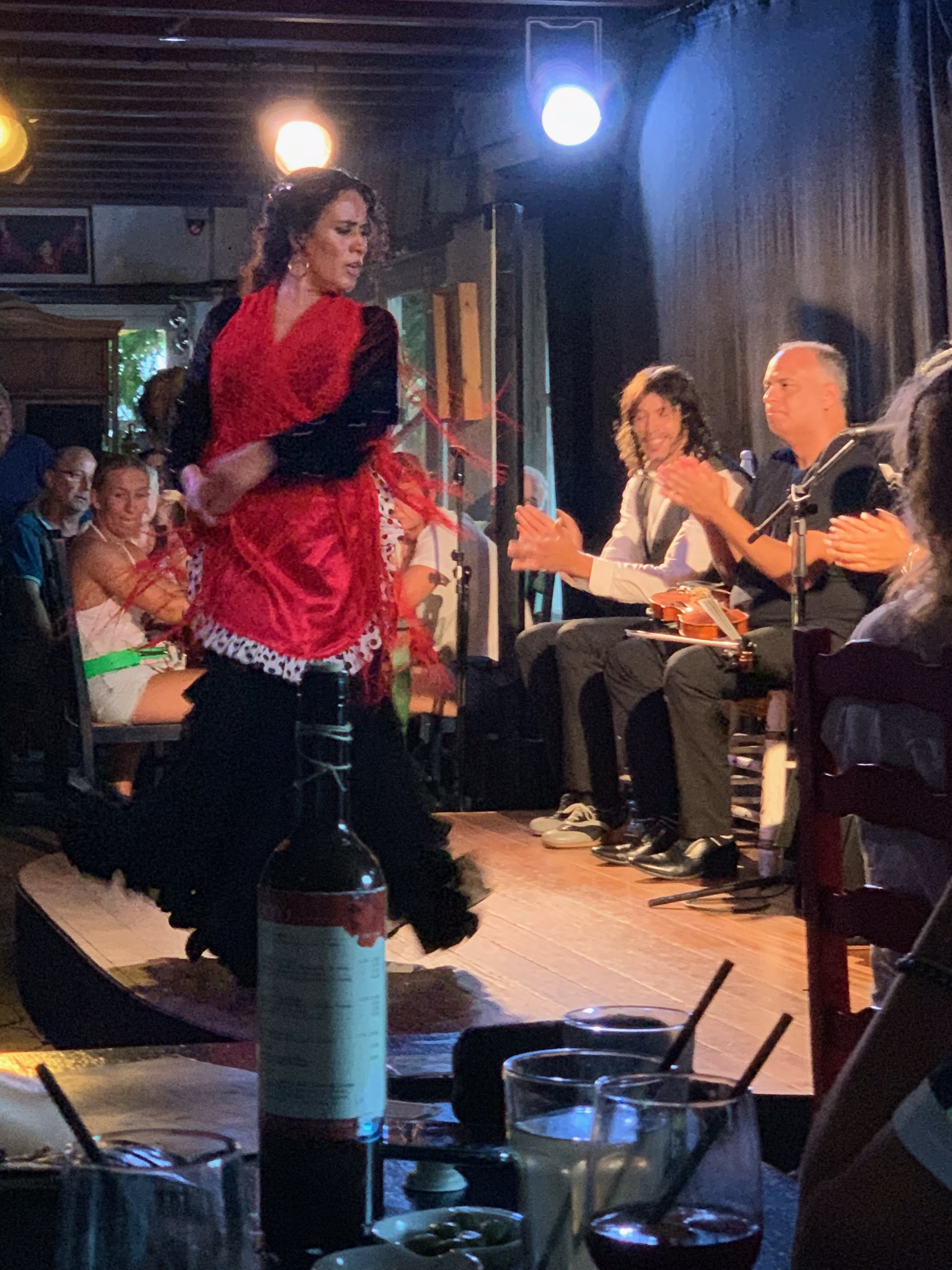 dancers, singer, violinist and guitarist of the Flamenco show were very high energy and passionate.
The Alhambra is a palace and fortress complex that was originally constructed in 889 AD but went to ruins until the mid-1200s when it was renovated and rebuilt by the Emir of Granada. It was then converted into a royal palace in 1333 by the last Emir of the region. While Queen Isabella was laying siege to the fort, Christopher Columbus petitioned her and received funding for his expedition. When Christians reconquered the region in 1492, it became the Royal Court of Ferdinand and Isabella.
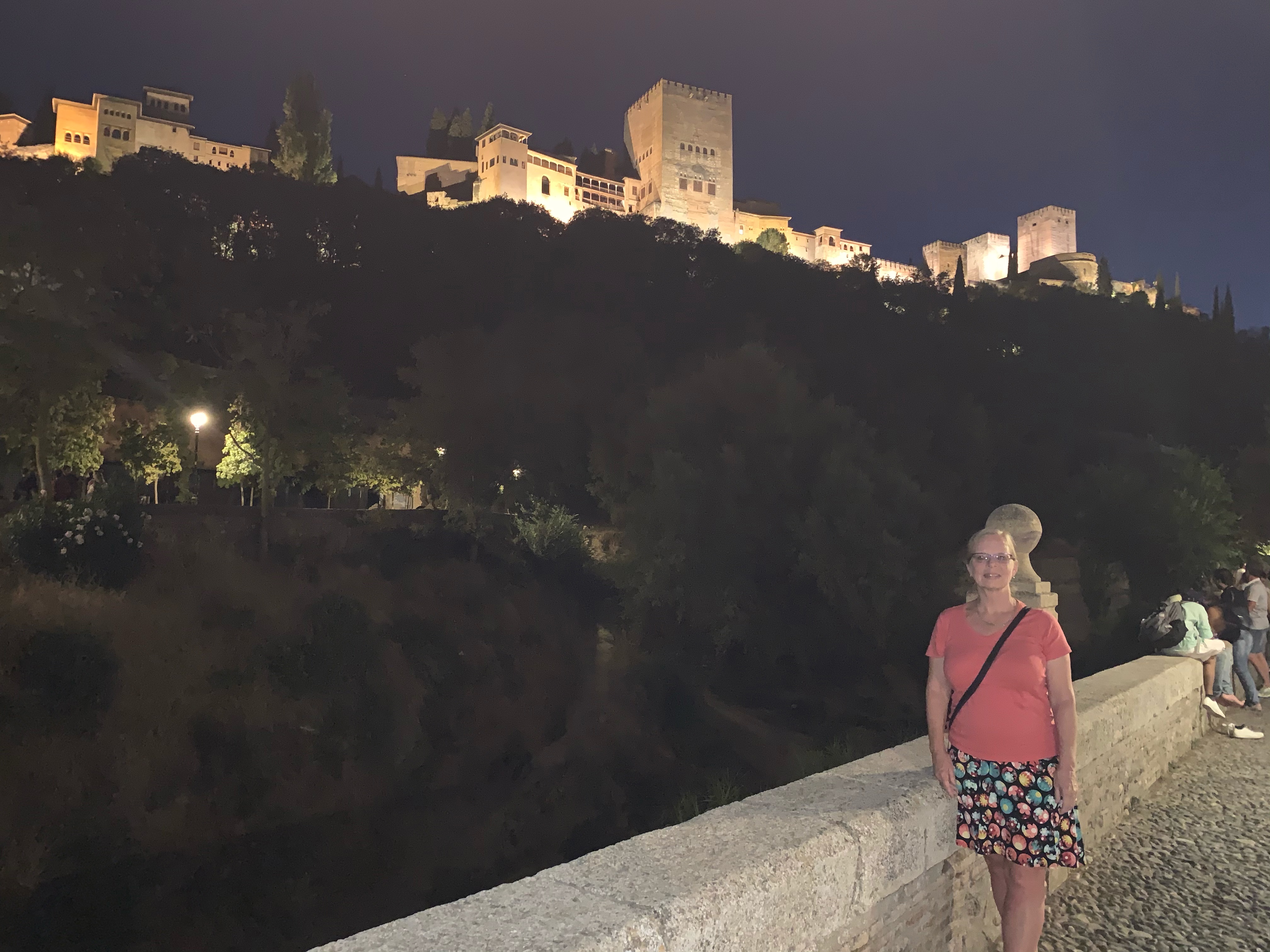 Being located high on a hill made it impregnable, so much so that Isabella negotiated surrender of the Alhambra rather then taking it by force. It was a city with palaces (summer and winter), housing for all who worked there, cathedrals, military fortifications and gardens. There was so much to see that it made our heads spin.


After all of this history we needed a beach break so in Part 2 we will be visiting Southern Spain’s beach cities.
 Travel the World Backpacking
Wonderful pictures! Enjoying your writings of your adventures!
Great post 😊
What is up with the large bubbles in the first picture? You are surrounded..☺
Hi Renee, how are you? I hope all is well. I wondered if anyone would notice the bubbles in the picture. A lady was there creating the bubbles for pics for tips. We didn’t realize that when we stopped to take a picture but it was fun.