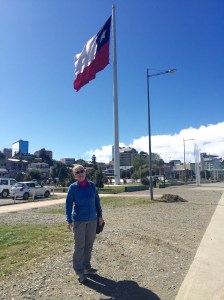
 Our adventure in Chile began with an eight-day cycling tour of the lakes region. With twelve lakes and six volcanos it is an area of constant beauty. After being off of our bikes for eight months, it was a very hard ride for us (we could always jump in the van when we got too tired). Our guide did a great job with
 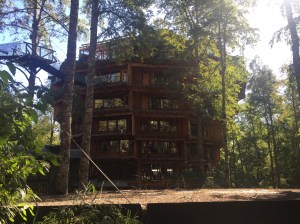 rides along bright blue lake shores, excellent Chilean dinners and lodging in luxurious resorts (much nicer than anywhere we stayed on our own).


North of the Lakes District central Chile is an agricultural area and very similar to Central California with acres of vineyards and orchards. Chileans are very proud of their wine. We enjoyed sampling it at every opportunity.
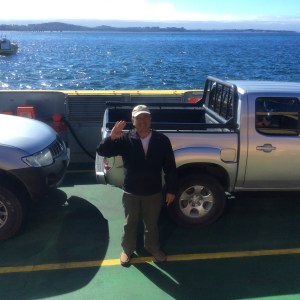 After the bike tour we headed south to the mystical island of Chiloe (Chil-o-way), South America’s second largest island. It can only be reached by ferry. As our bus headed south we expected to get off the bus to board the ferry but were surprised when our bus pulled right onto the ferry. Chiloe is know for it’s 70 historic churches that were built in a very specific architectural style whereas the roof construction resembles an inverted hull of a ship. Sixteen of the churches are outstanding examples of the successful fusion of European and indigenous cultural traditions and are UNESCO World Heritage sites. The abilities of the people of Chiloé as builders achieved its highest expression in these wooden churches, where farmers, fishermen and sailors exhibited great expertise in the handling of the most abundant material in this environment, wood.


We spent several days in Castro on the eastern shore of the island. We took a day tour across the island to the Pacific to see the Bridge of Souls. The story is that when people from Chiloe die their souls go Point Pirulil where they are met by a man in a boat. If they can pay the price (generosity or good works) they climb into the boat and go to the afterlife. If they can’t pay, their souls are left to hover around the area. Because of this, it is a sacred place that many people take the five mile trek to see.


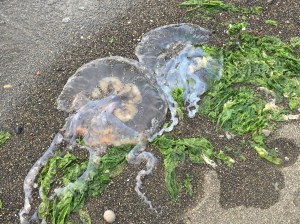 While walking along a beach on the eastern side of the island we were amazed to see many of these giant jellyfish washed up on the beach.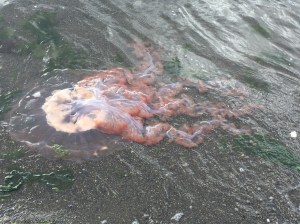
Santiago was one of the big cities we enjoyed most. There were many sites to see, a street cafe culture and the opportunity to take a cycling tour of the city on their extensive trail system. Santiago has a great public transportation system so it was very easy to get around the city. In the middle of the city is Santa Lucia hill where this castle is located.


For only forty dollars per night we are stayed in something called an apart hotel. It is a small apartment with a little living room, bedroom and kitchen. Many of the units are occupied by people who live there full-time. Our unit was on the 12th floor. We shopped and cooked our own dinners for the first time in eight months. After a week there we felt like residents ourselves.
 Chile is a fairly expensive place to visit but it is westernized and quite comfortable. As we left Chile we realized that we had surprisingly spent over eight months in Latin America. We are looking forward to meeting Lindsey and Ryan in New Zealand.
 Travel the World Backpacking
I am enjoying your trip immensely. Chile especially sounds lovely.
Bon Voyage!
Thanks Liz. I am glad you are following along.
Hi Tina, I am currently in college taking a course in Geography with Professor Alvin Graves. I chose to do my presentation in South America and your blog has been a breath of fresh air ! I’ve been reading your posts and would love to use as examples for my presentation. I do have some questions for you, “What’s been the most meaningful experience traveling in South America comparing to your North American home?” and ” Would you do this again ? “
Hi Daniela,
I am glad that you are following us. Be sure to tell Mr. Graves “hello” from Mike and Tina. We would definitely do our trip again and after almost nine months are still looking forward to our future travels. Our next stops are New Zealand, Australia and then South East Asia. The most interesting things I have taken from our travels so far is that people throughout Mexico, Central and South America are just like us. Except for the language barrier they could have been Californians. They all just want to work, raise their families and enjoy their lives. The biggest difference is between urban and rural people in the different countries. Rural Peruvians still wear traditional dress and live by traditional norms but urban Peruvians like those who live in Lima are very modern. They dress modern, embrace technology and live a much faster paced life. The other thing I have noticed is that everyone is so nice. In our travels we have rarely met people who were not nice and willing to help us. If you have additional questions don’t hesitate to contact me.
Tina