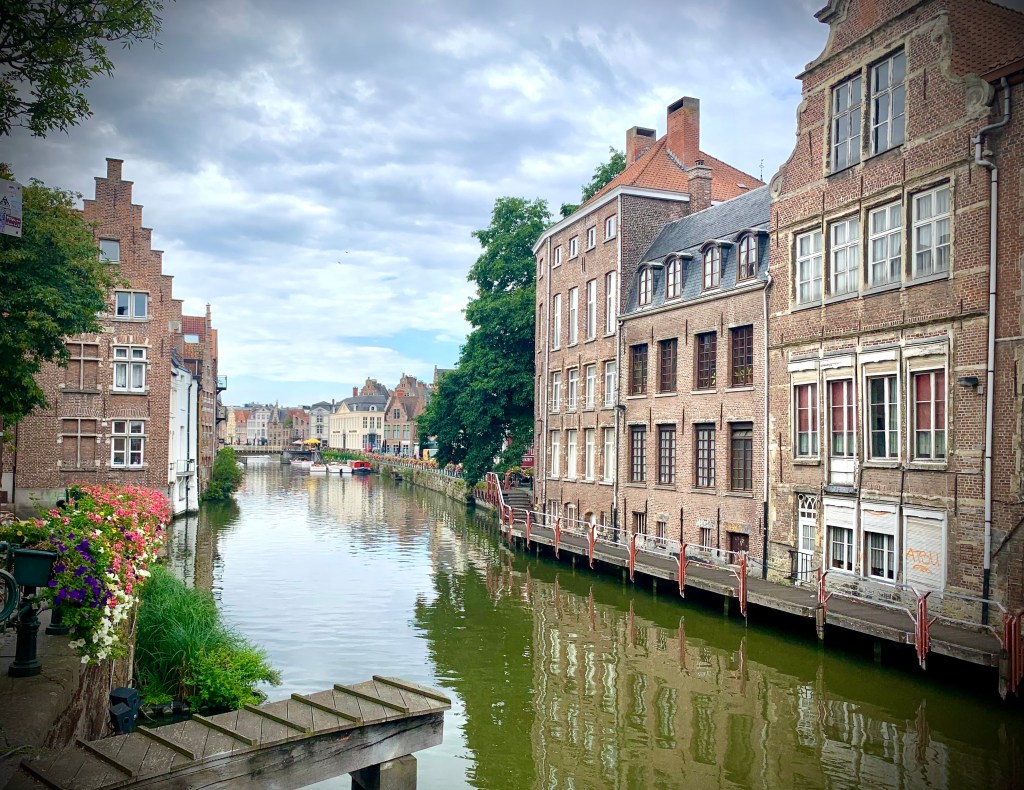
Our last two stops in Belgium were Ghent and Bruges. They are very similar medieval towns that draw a lot of visitors from all over Europe. Ghent is the smaller town and is up and coming as a tourist destination, while the larger Bruges is a long-time tourist favorite. We went to Ghent first and found it very charming. Their tourist office offered an inexpensive pass to visit many of the sites around town as well as a canal boat tour.
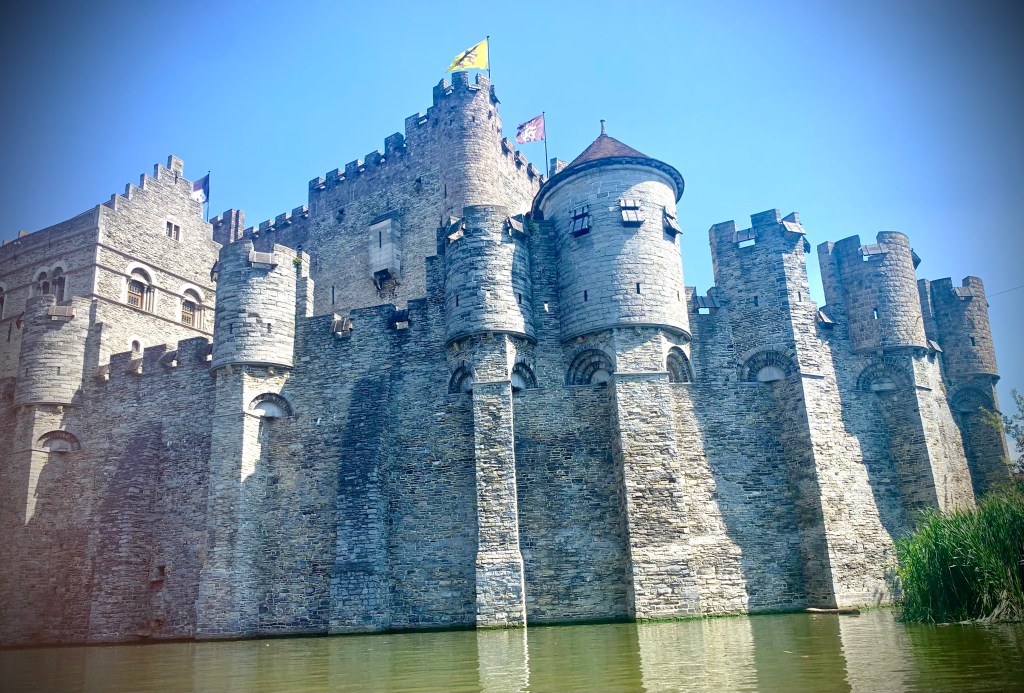
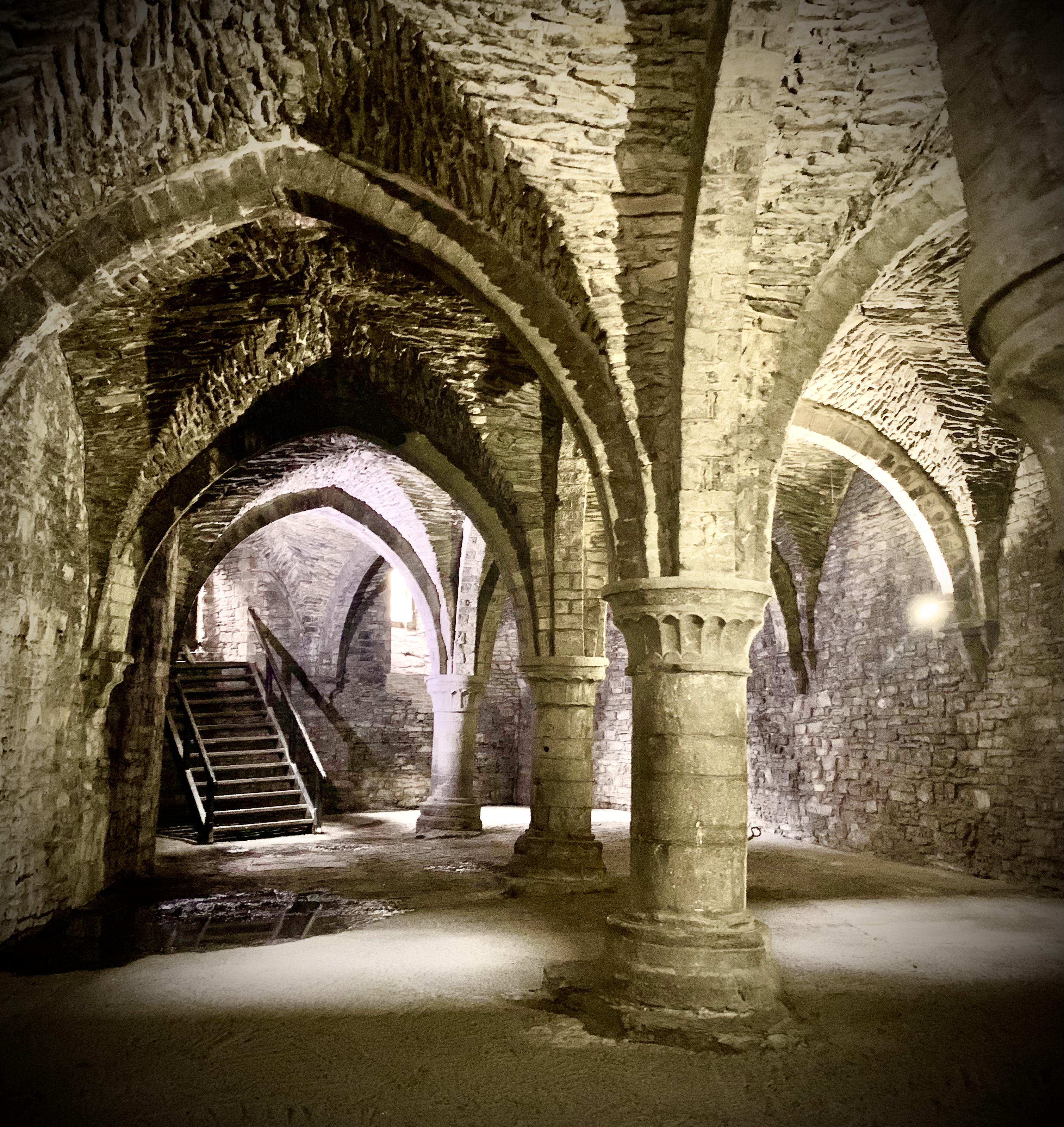
First stop on our self-guided tour was the Gravensteen Castle. This castle is unusual because it was built right in the core of the city beginning in 1160. Castles were usually built on a hillside overlooking the town. This castle served as a court, prison, mint, and cotton factory during it’s lifetime. Today it’s a museum and provides a look into life in the castle through an audio tour.
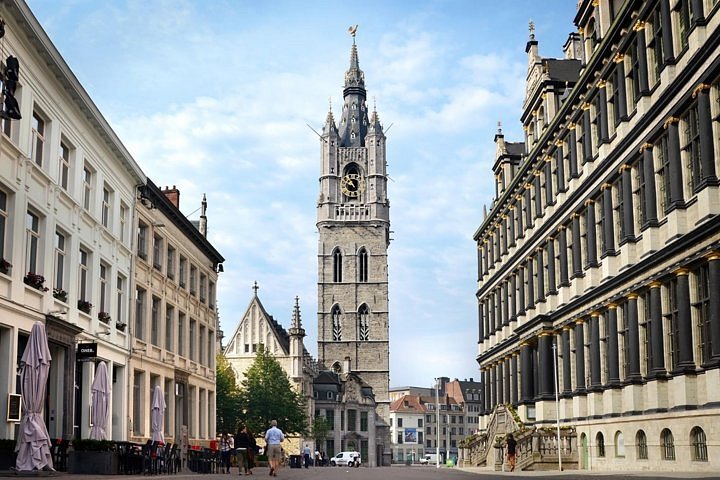
We went to the top of the Belfry of Ghent for a view of the whole town. Besides religious purposes belfries (towers with big bells in them) played an important role in medieval towns and Ghent’s belfry was one of the earliest built from 1313-1380. Medieval towns were quite chaotic and one of the reasons was that there was no ability to keep time. Beginning in 1378 hourly bells rang out marking the hour to help regulate daily life. Ghent was one of the first towns to use their belfry in this manner and soon it was a requirement that all towns have a belfry to keep time. We saw belfries in many towns but Ghent’s was the only one we went to the top of because it had an elevator.
The Saint Bravo Cathedral (Catholic) and Saint Nicholas’ Church (Protestant) were beautiful examples of the difference between the ornate cathedral and the much more modest church. While both were quite large and had soaring ceilings, the cathedral was highly decorated. The pictures were shot from the Belfry.
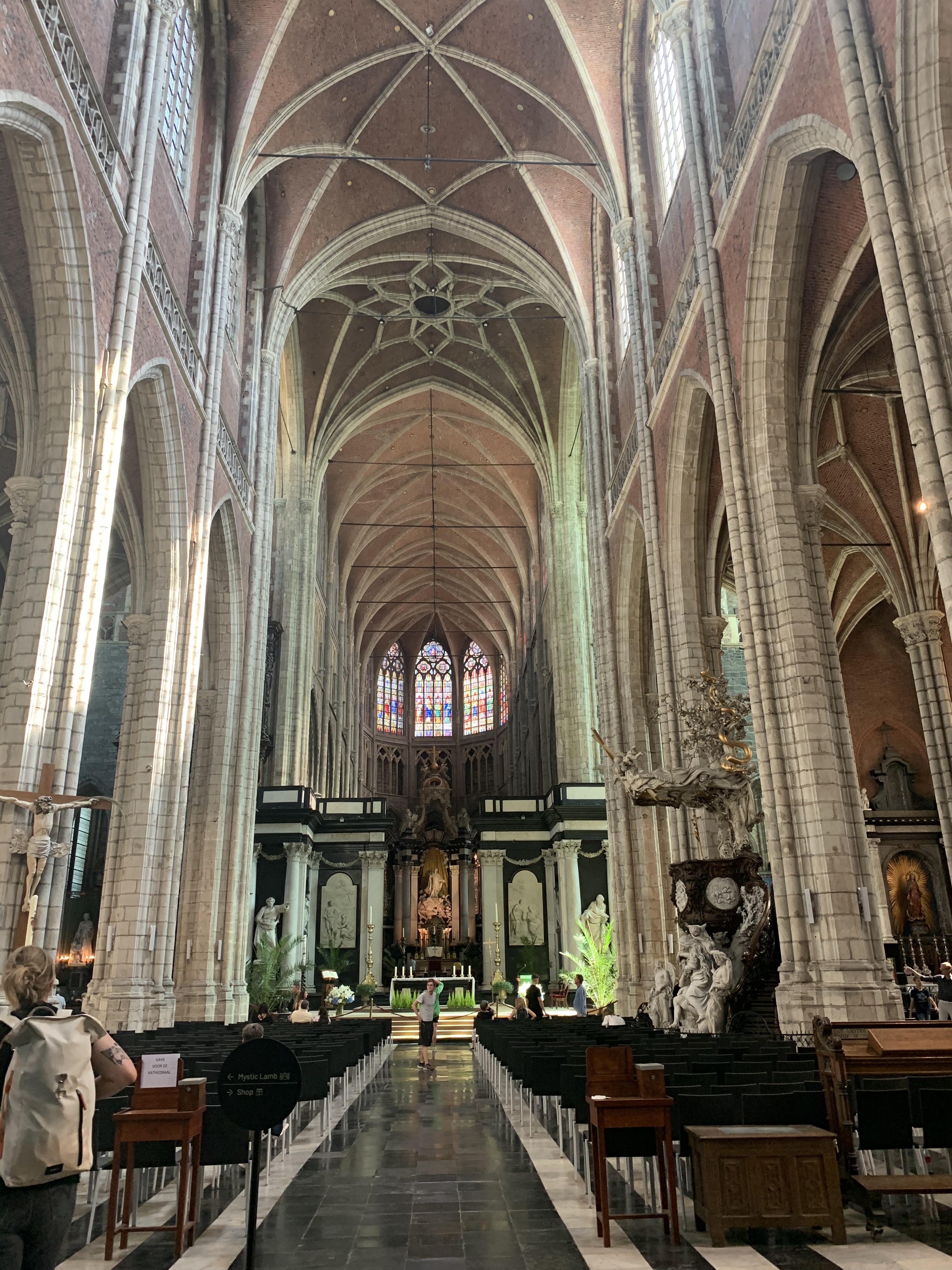
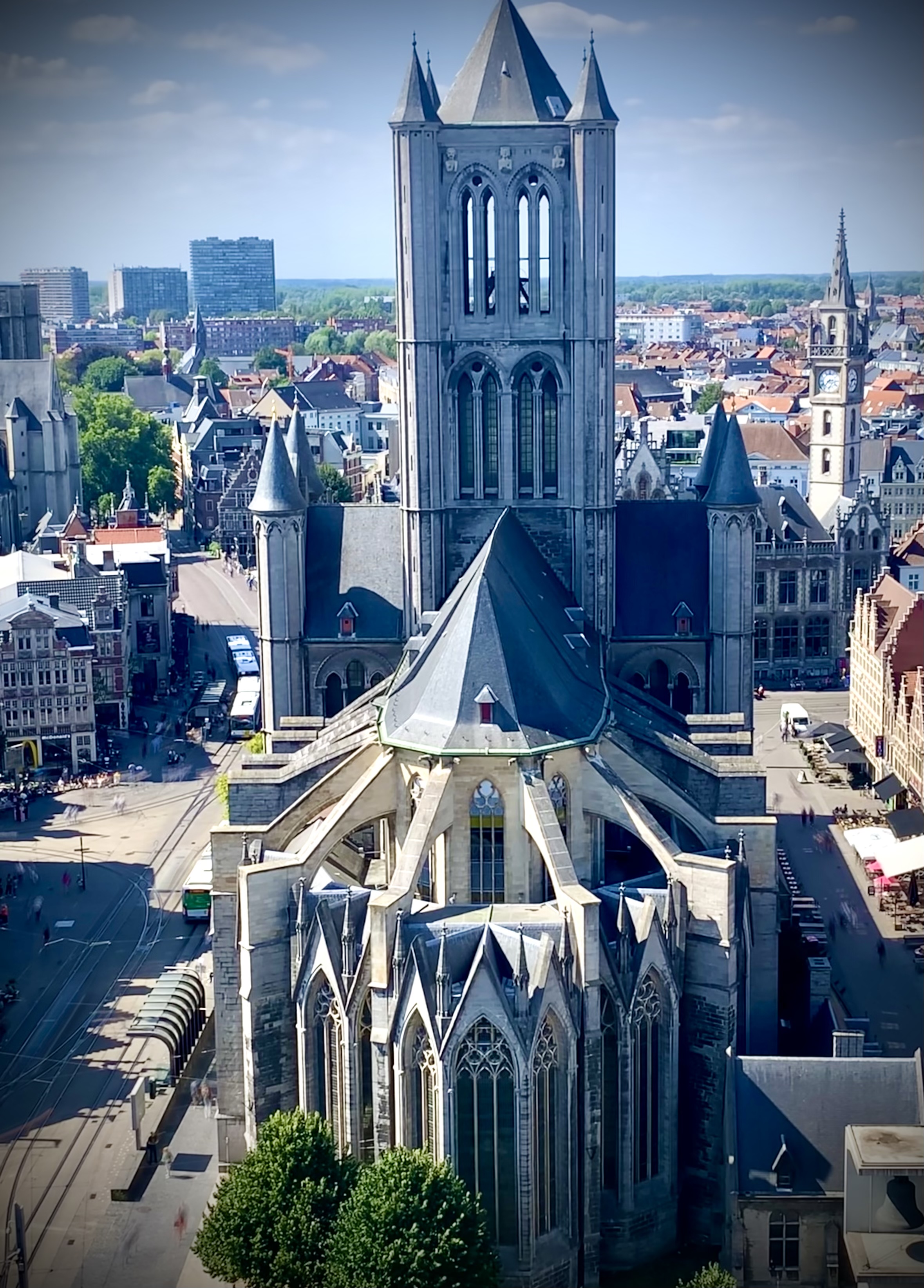
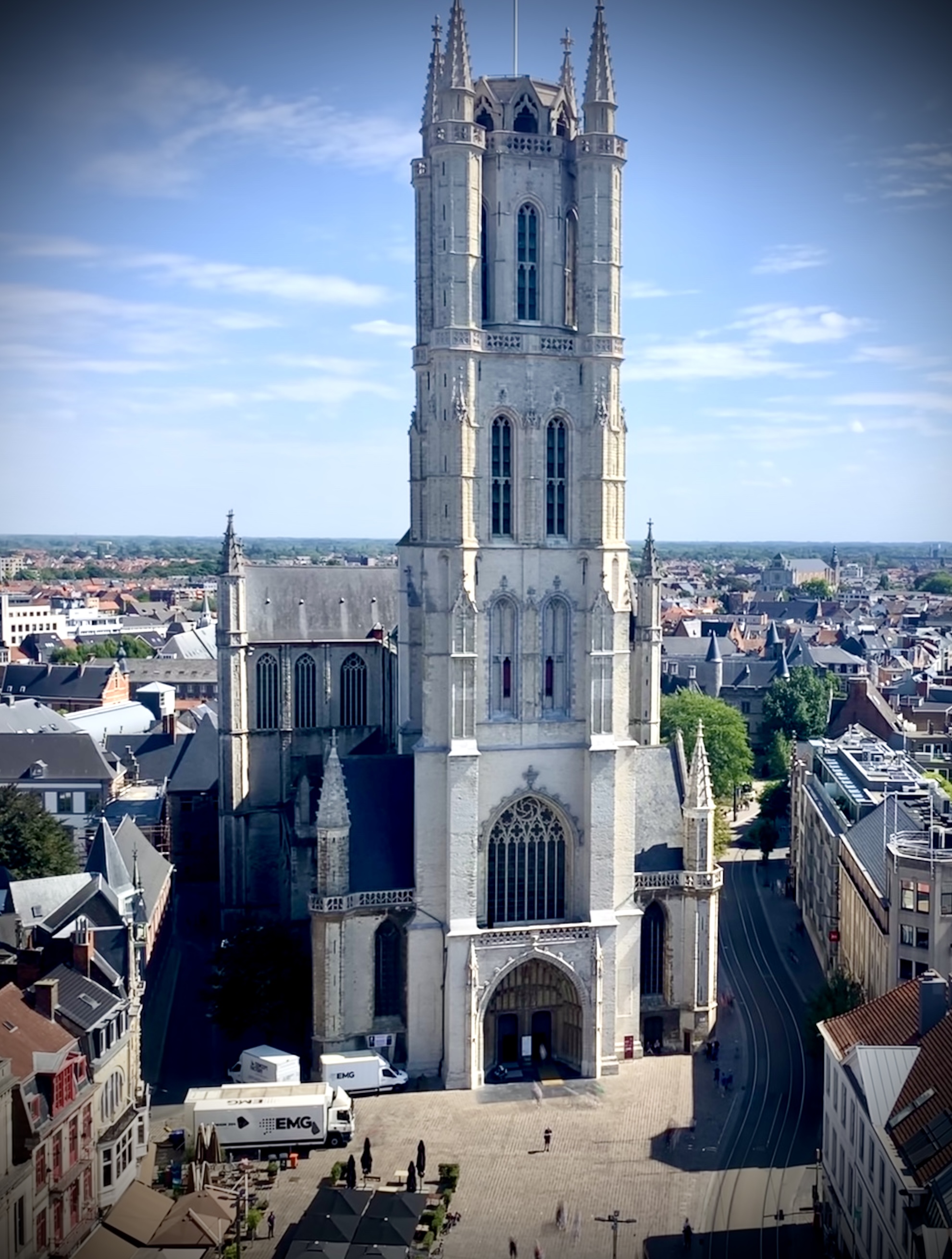
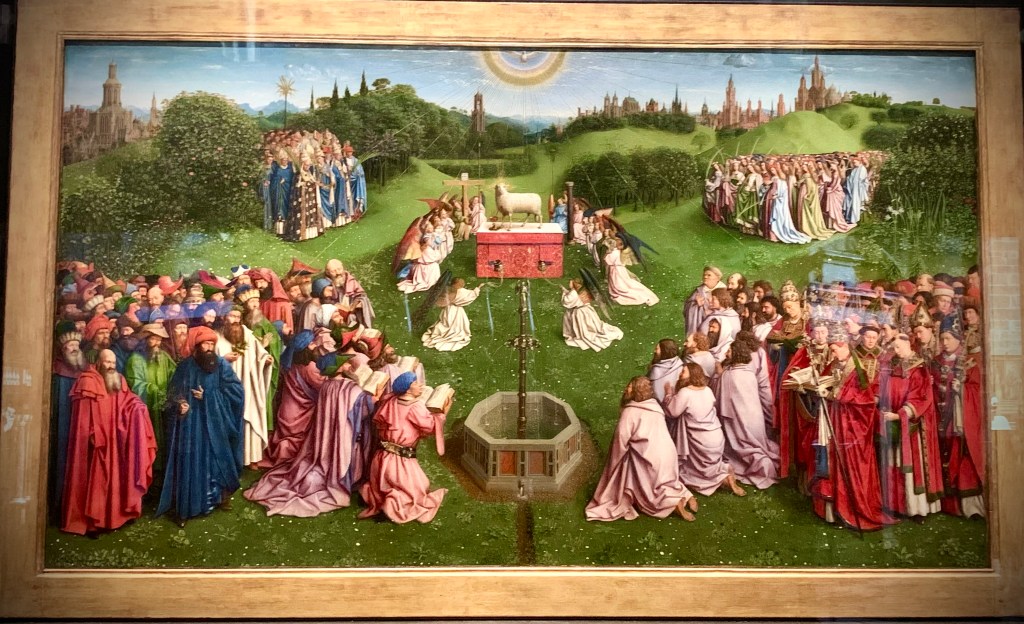
The Adoration of the Mystic Lamb is an altarpiece from the 15th century located in Saint Bravo’s Cathedral (third picture above). This masterpiece was the first major oil painting and it is seen as the transition from Middle Ages to Renaissance art.
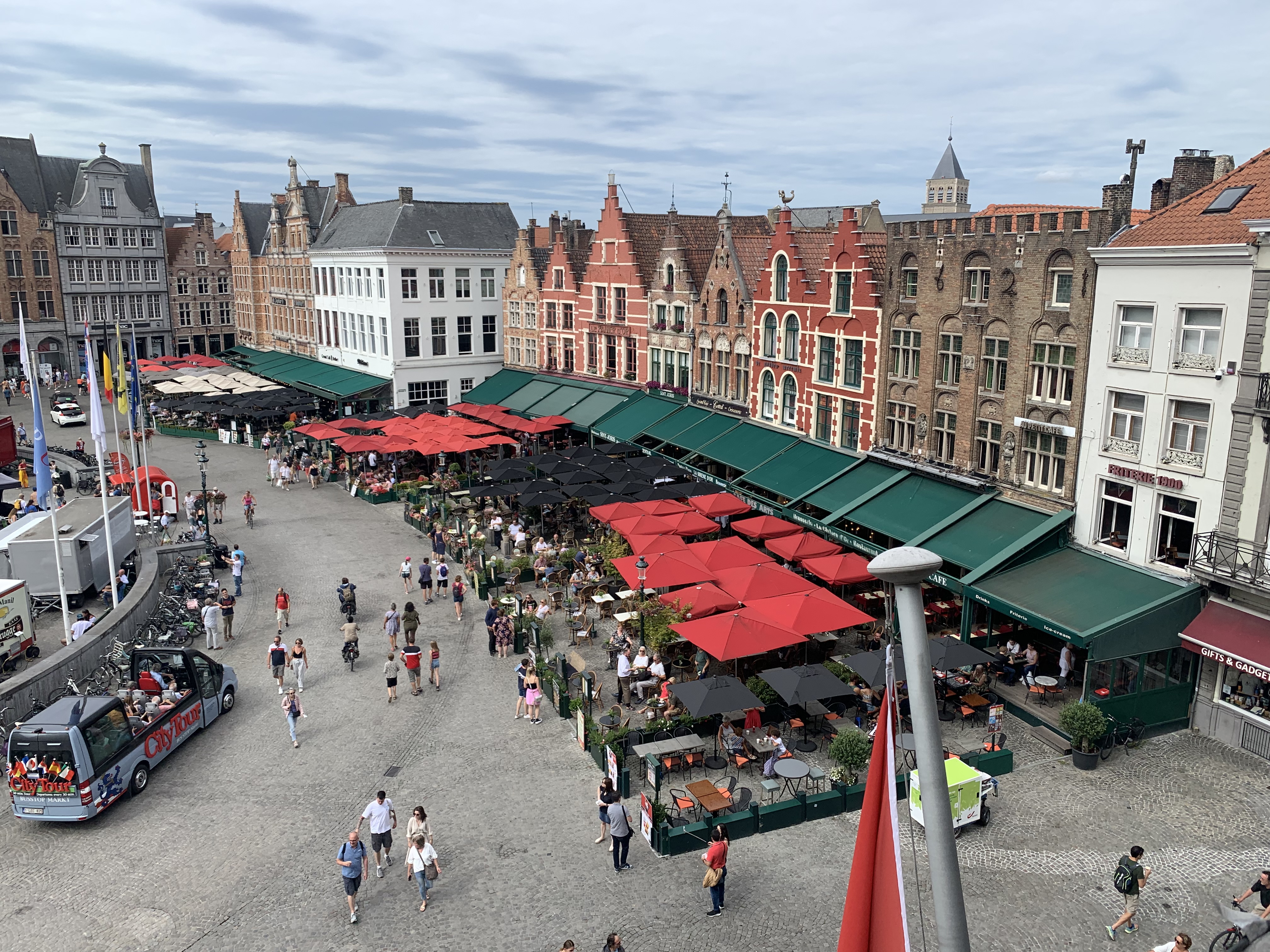
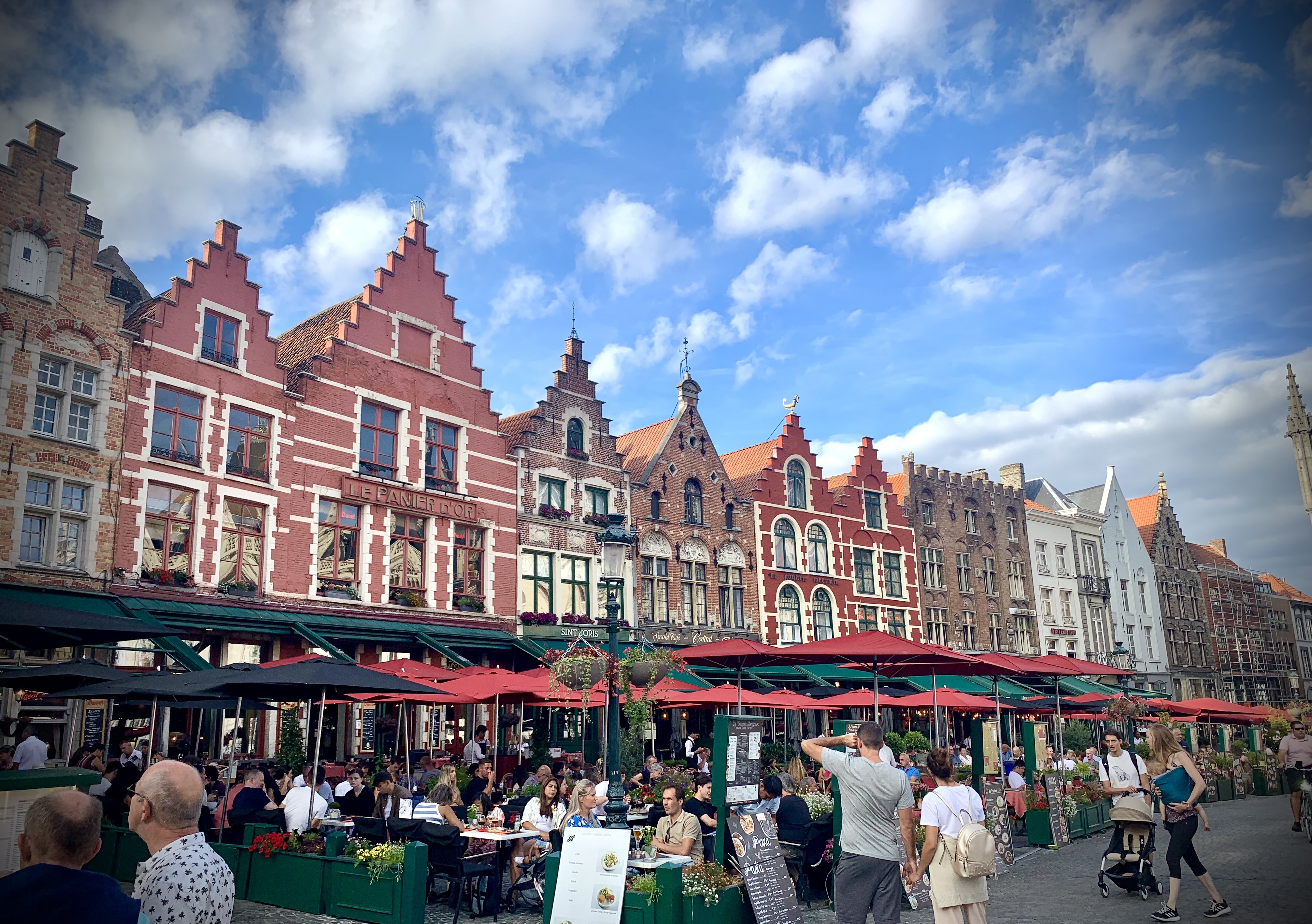
The ride to Bruges was only 25 miles and once there we found a larger more hectic town. Our hotel was only a couple of blocks from the main square where we found many restaurants, a history museum and the belfry. We enjoyed a small-bus tour around the town. The small bus was nice because it could navigate the narrow streets of the medieval core of town.
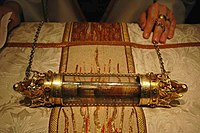
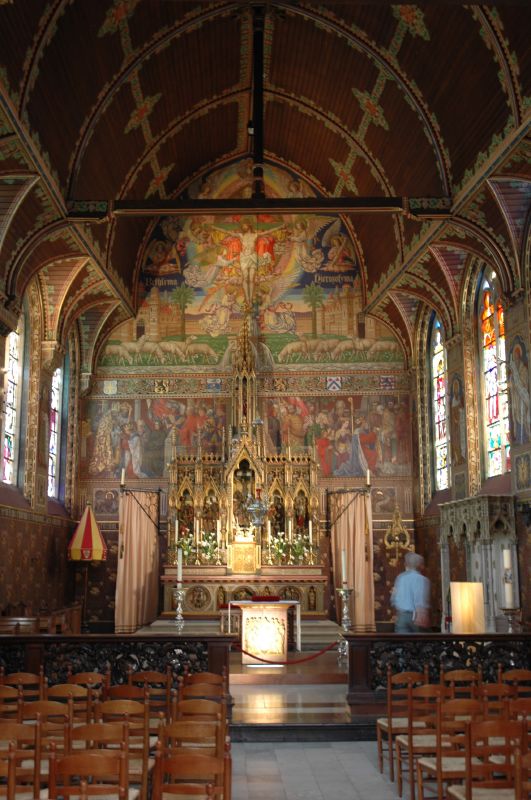
One of the most amazing things we saw was at the 1,000 year old Basilica of the Holy Blood. This two story chapel houses a crystal vial that contains Christ’s blood collected and brought back from the Crusades in 1149. We weren’t able to take pictures because it is a very sacred place overseen by a priest. The picture is from the internet.

Okay, just one more church… at the Church of our Lady we got to see Michelangelo’s Madonna with Child statue. It was carved in 1501-1504 and is notable because it’s the only piece of Michelangelo’s work to have left Italy during his lifetime.
We really loved these Medieval towns, and once again we could have spent a week in this place but we had to get on our way to Dunkirk, France.
 Travel the World Backpacking