Our one hour ferry ride, across the Strait of Gibraltar, took us from Tarifa, Spain to the port city of Tangier on the north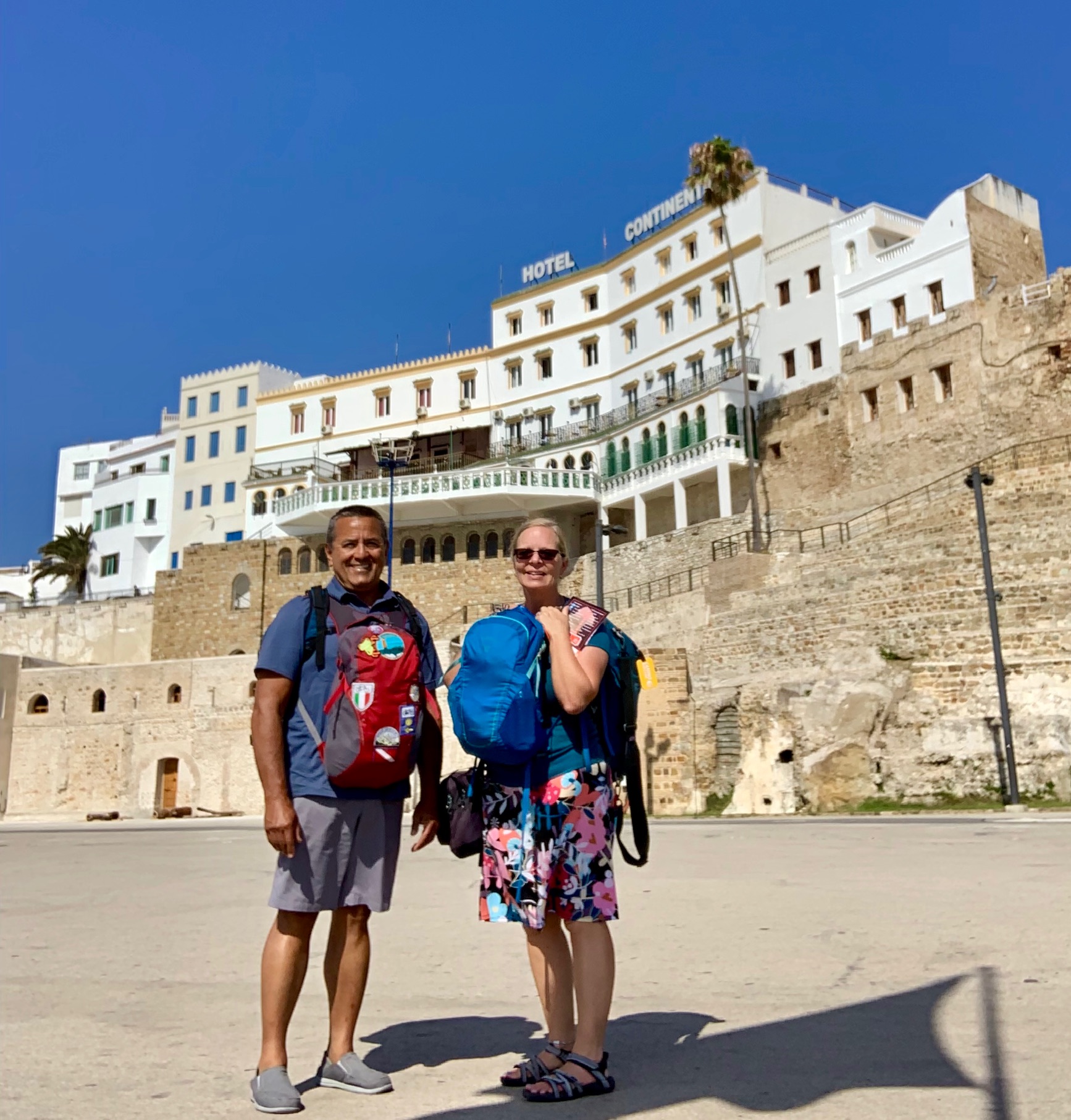 ern tip of Morocco. Morocco is on the very northwestern edge of Africa and is predominantly Muslim. In addition to Tangier, we traveled by train to spend time in Fes and Marrakech. We decided to stay in the medinas rather than the newer parts of the cities so that we could soak up the culture and atmosphere of the country. In Tangier, our Hotel Continental was built in the 1870s and it backed onto the medina but faced out over the walled rampart of the City. The Continental is very ornate and was the place the rich and famous stayed in the mid-1900s.


 Our Riads (original very large homes that have been rehabilitated into guesthouses) in Fes and Marrakech were solidly in the tiny, narrow passage ways of the medinas.
The ancient walled portion of the cities are called the medinas. Medinas are characterized by narrow alley ways that wind here and there without a grid pattern (it’s very easy to get lost). In Morocco, the medinas are from the 9th and 10th centuries. Areas outside the medina are often called the “new town” even though buildings could be as old as the 15th century. The medinas were built long before motorized vehicles, so these narrow streets are primarily pedestrian with animals doing the hauling, but we also saw bicycles and scooters. In Fes, mainly donkeys and small horses are used to transport goods. Inside the medinas are bustling communities with artisan shops, palaces, fountains, mosques, schools and homes.


The medieval looking doors of the buildings are actually two doors, a large one and a small,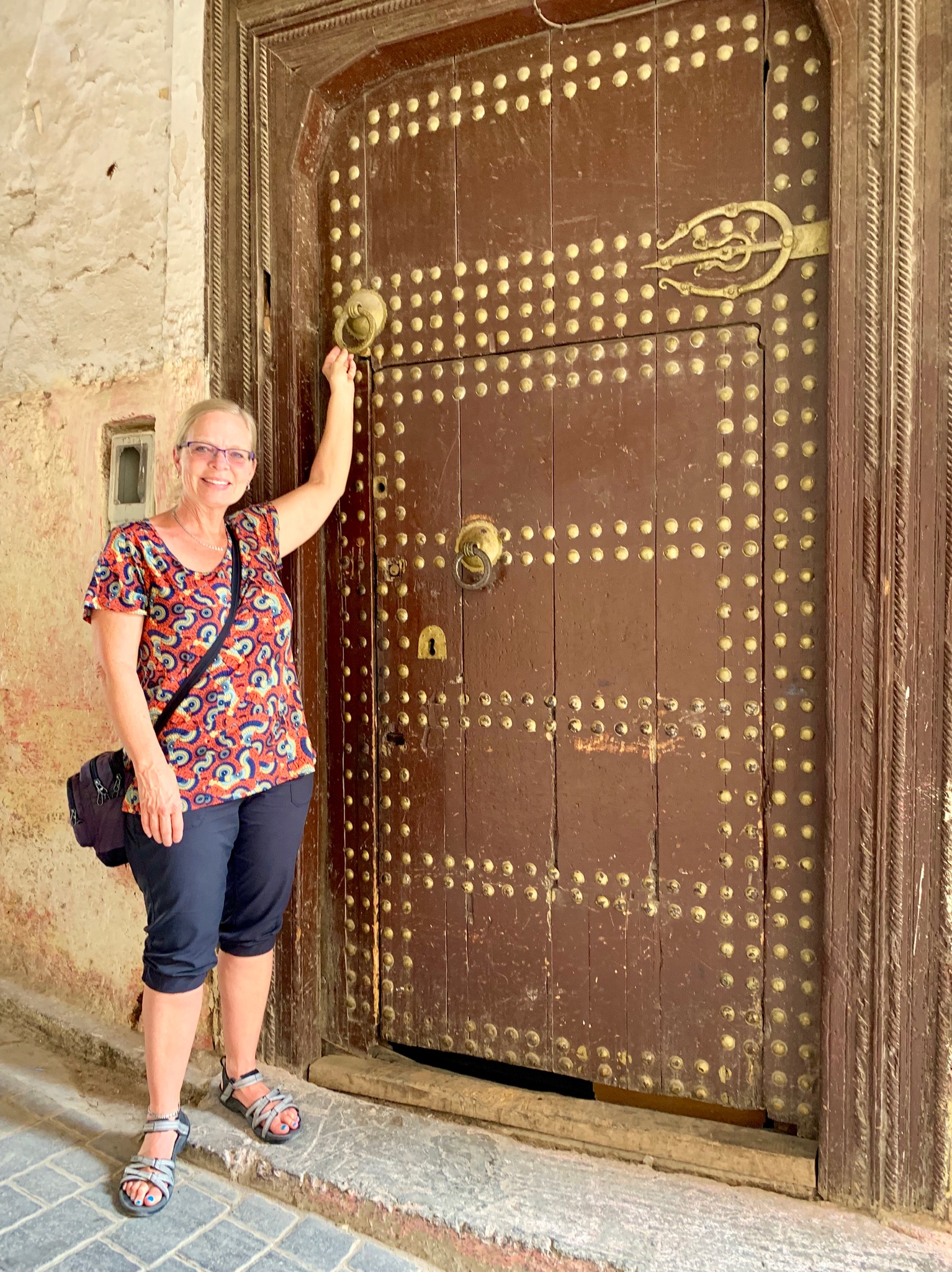 person sized door. The large door was so that camels and horses could be rode right into the courtyard of the home. The small door was used for daily access.
Also in the medinas are plazas that often take their names from the activity that goes on there, or traditionally did. There is a lot of pride in learning and continuing their centuries old crafts. Those who reside in the medinas use the handmade wares everyday. In Fes, we visited plazas specific to working copper into pots, carving wood, shaping tile and dying leather. The tannery was fascinating and smelly. The workers were right down in the dye tubs processing the camel hides through the many stages. Workers in the tannery are decedents of many generations who have done the same work.
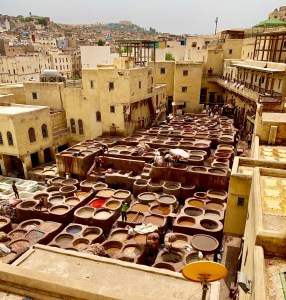
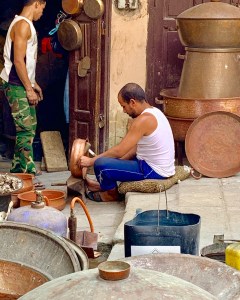
 Each of the walled medinas has several gates for access. The Blue Gate is the main access in Fes. Historically, nearby the medina gates is where you would find funduq. The word funduq, which means hotel, is nowadays used for these old structures which offered accommodation to travelers and traders that visited the city. These before and after pictures are of one in Fes that has been rehabilitated and will soon be filled with shops.


The role of the medinas overall has changed. Historically, the rich and the poor lived side by side in the walled cities. The rich built very large homes with big courtyards and multi-story living space. Today, most of the rich have moved out of the medinas and their homes have been divided up into smaller apartments and Riads (we also noticed that many buildings are empty or for sale). As rural migration continues, the medinas receive many immigrants. They have the lowest rents, and there is the proximity to public amenities and services. There is also a desire of tourists to stay in the medinas so many of the buildings have been converted into lodging and restaurants.


In each large city we visit we like to take the City Tour Hop-on-Hop-off bus to see all the 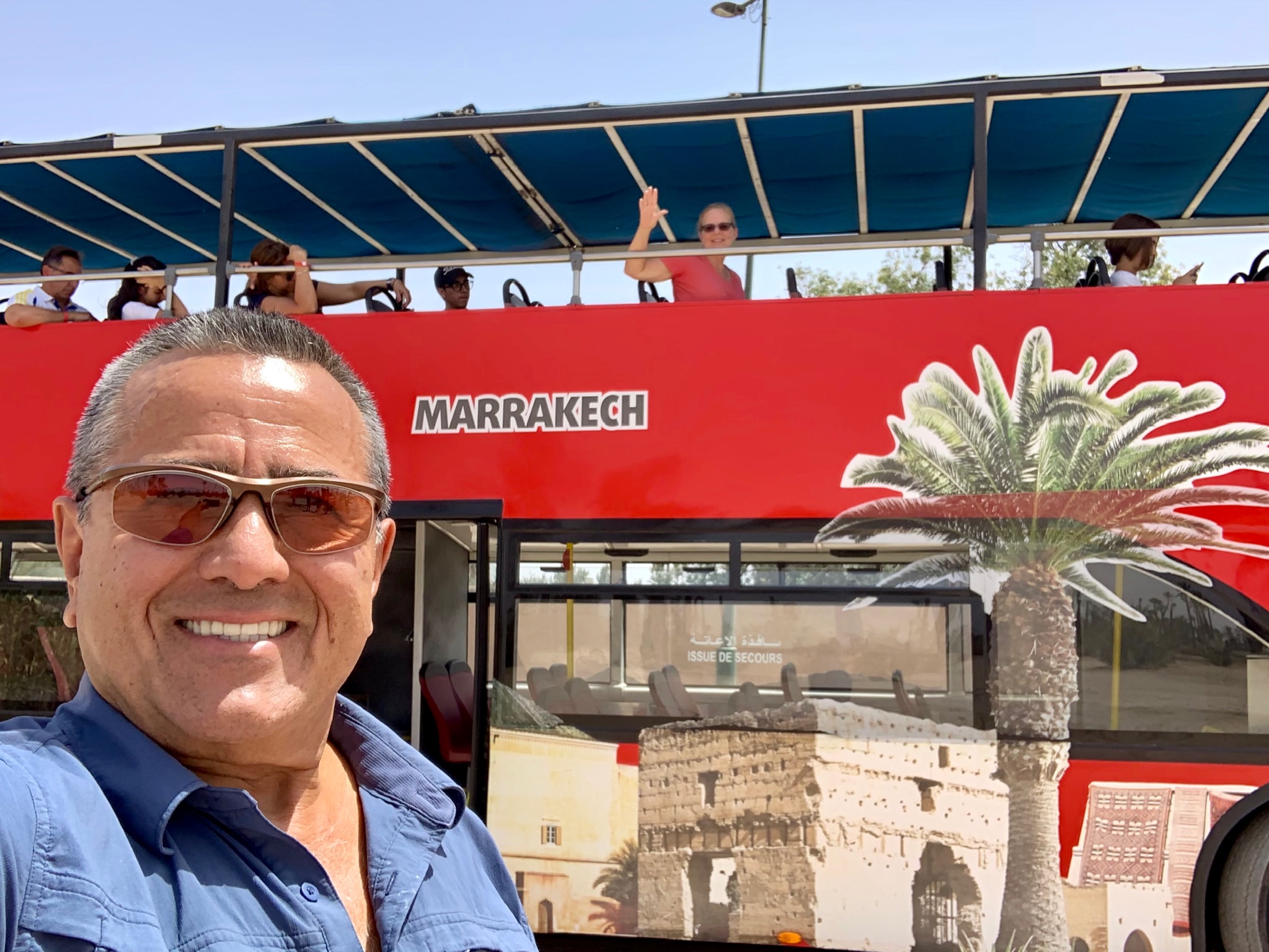 sights. We don’t usually hop on and off much but just ride around listening to the recorded information. It is a great way to see the bigger picture.
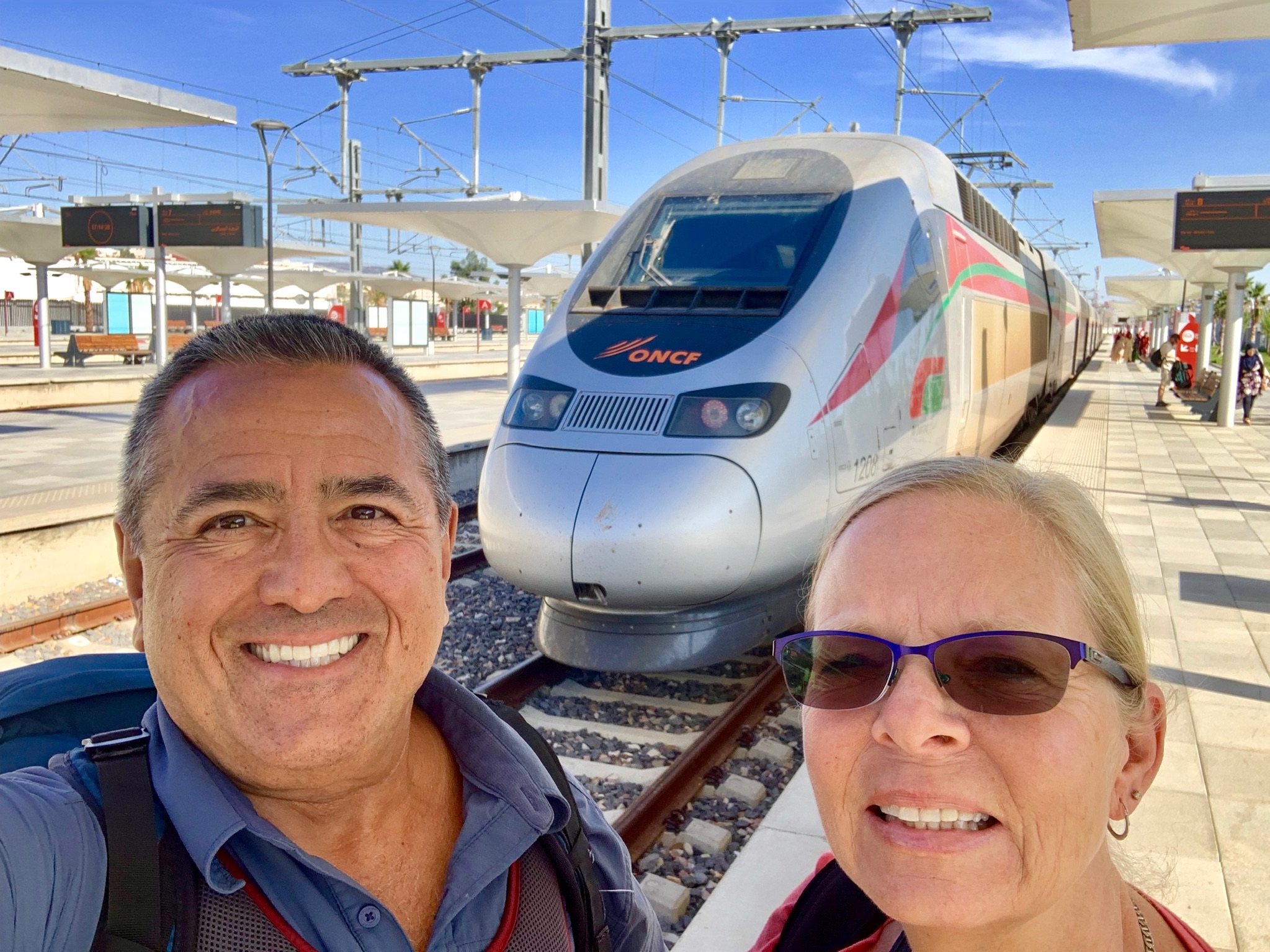
Our final adventure in Morocco was to take a high speed train (it was very fast, we passed cars on the adjacent highway like they were standing still) from Marrakech to Tangier to catch the ferry back to Spain.
 Travel the World Backpacking