Our arrival in Moscow was exciting but also bittersweet because the cruise was coming to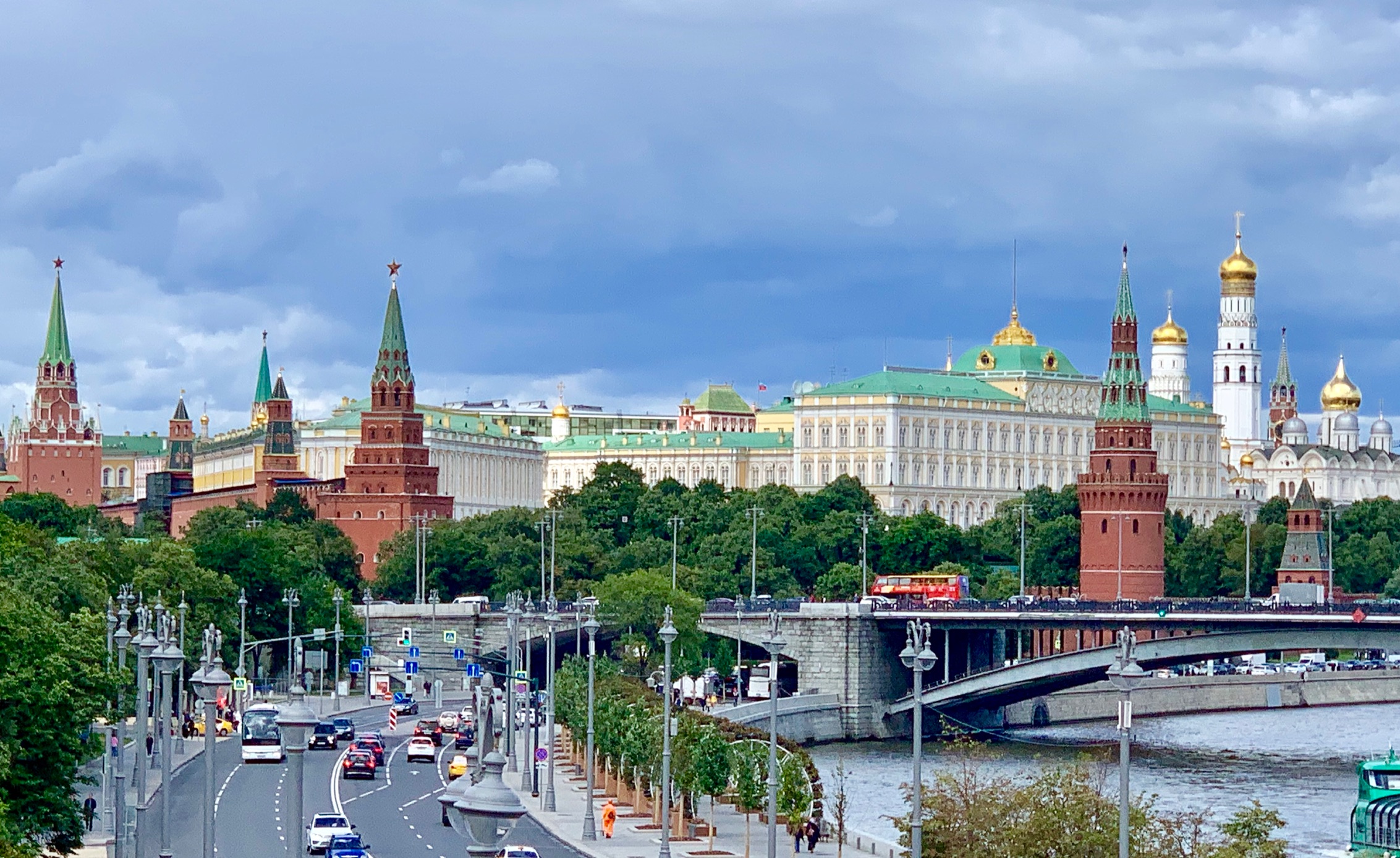 an end. We weren’t sure about taking the cruise but we really enjoyed the ship with it’s super friendly staff, excellent service (our room was cleaned twice a day and we aren’t that dirty), too much delicious food and interesting and informative lectures about Russian history. I even took a couple of Russian language classes while Mike napped. We would travel with Viking River Cruises again in the future.
People lived in Moscow beginning in 500 BC but the real growth of the city began in 1147 AD when a wooden fort that is now known as the Kremlin was built. Although St. Petersburg was the capital city for 200 years, in 1918 the capital was transferred back to Moscow. With a population of about 13 million, about 12 percent of the total Russian population lives there.
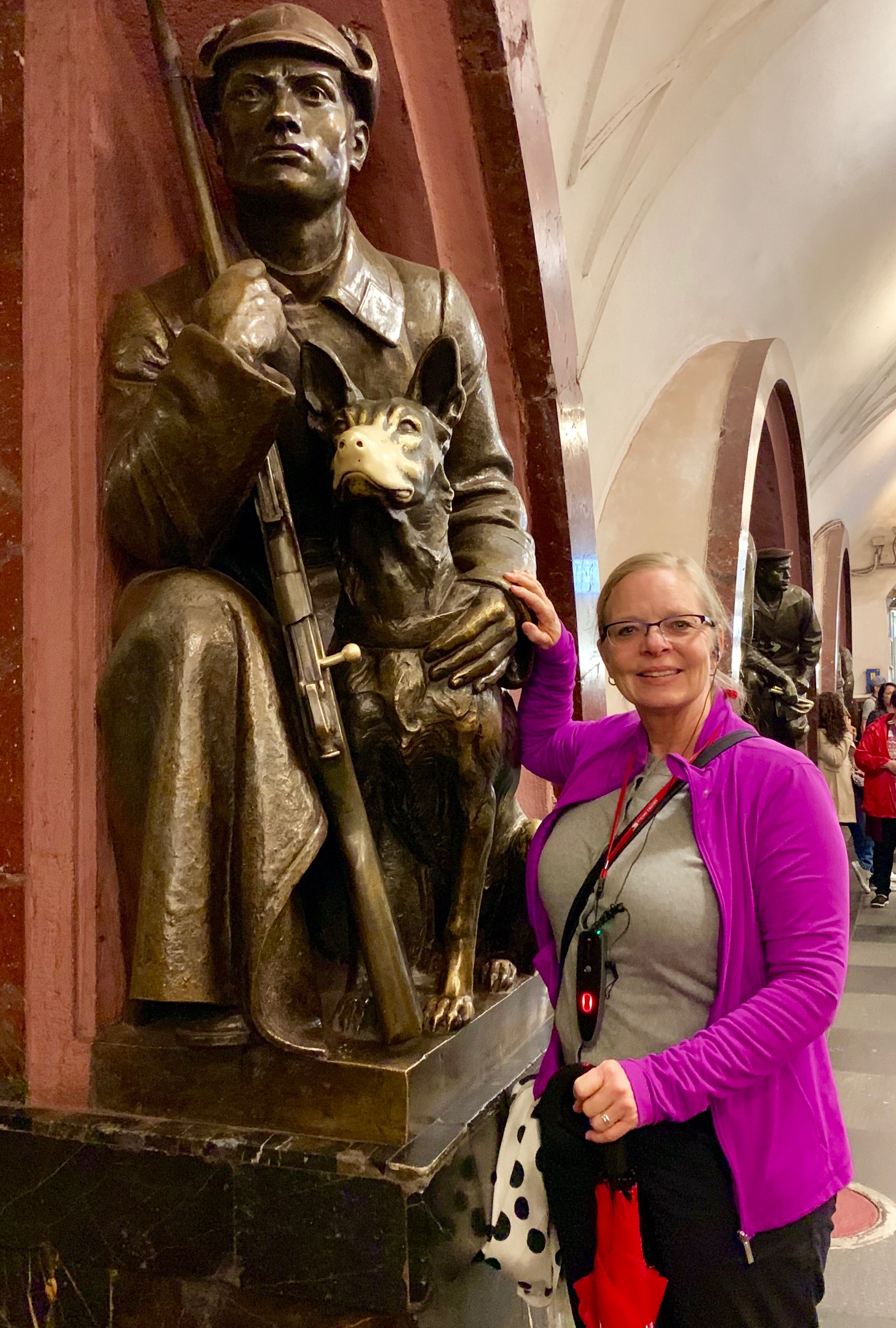 Our first tour in Moscow was a walking tour of the historic center. We began with a ride on Moscow’s extensive subway system. We got off at a few stations to view the artwork. The art is known as Socialist Realism, a genre of the late 1930’s that glorified Communist values (proletarian, realistic and partisan) showing happy workers and war readiness. It was a good thing we had a guide because we got on and off of trains, up and down escalators and down long hallways to see everything. I was totally lost by the time we went above ground in Central Moscow. The subway is great though because Moscow’s traffic is terrible, it ranks as the worst in the world.


When we see American news stories about Russia they often show a picture of Red 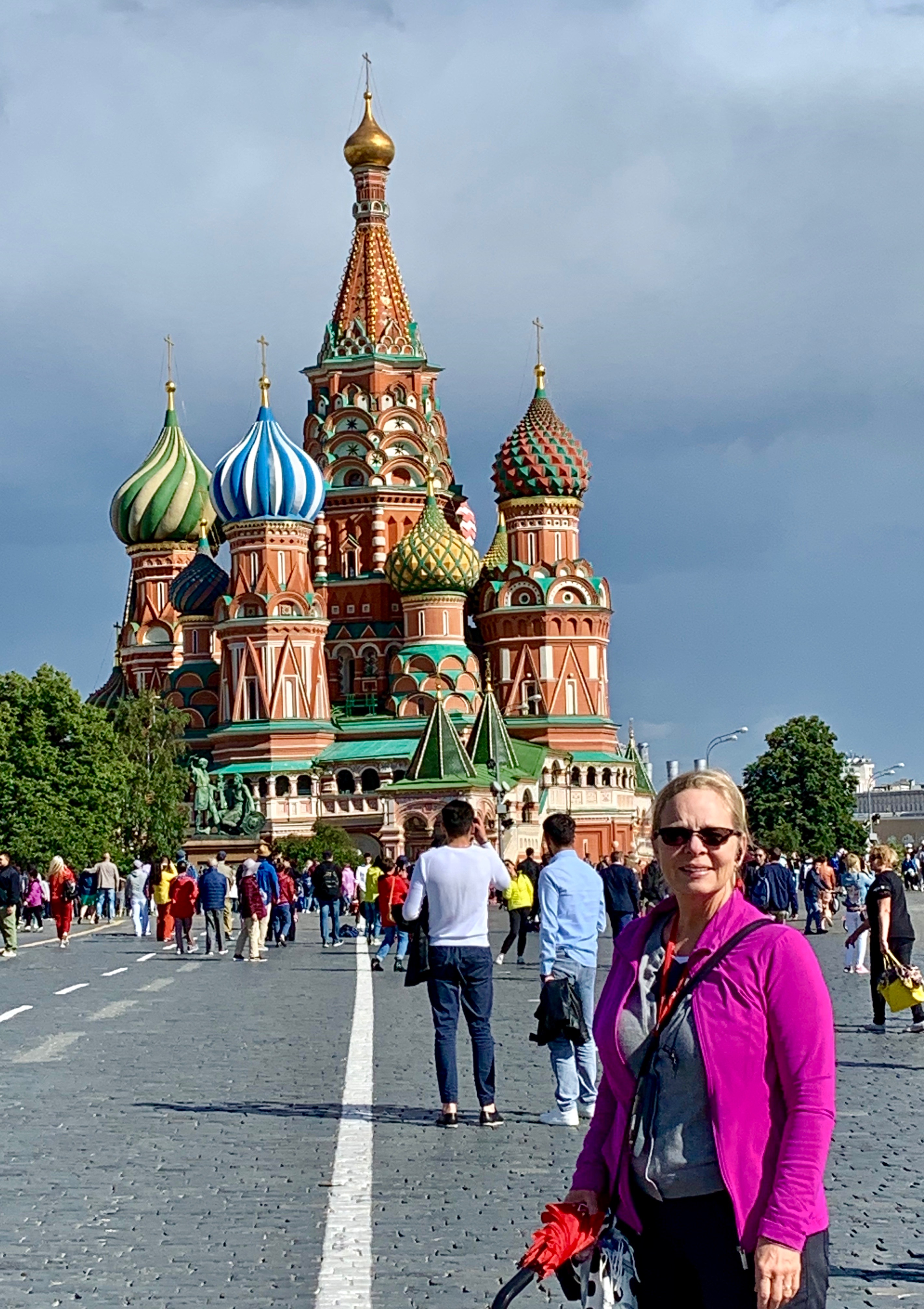 Square as the visual. While the Kremlin is the fortress off to the side of Red Square, St. Basil’s Cathedral is what catches our eye. St. Basil’s was built in the 1500’s by Ivan the Terrible to commemorate a military victory.
Red Square is where we see Russian military parades being held. It is also where Lenin’s Tomb is. We did not get in the mile long line to see it though. From Red Square, all you can see of the Kremlin is the fortress wall and the tops of buildings. But inside the Kremlin there are three cathedrals, monasteries, palaces, the President’s (Vladimir Putin) residence and offices, large monuments, gardens and a helicopter pad. Interestingly, Putin does not live in the official residence. In fact Russian people are not sure where he actually lives. He helicopters into the Kremlin and then takes a car through tunnels to his office. According to our guide, he is very reclusive and the people rarely see him or his family in person.


What we saw in Russia was that St. Petersburg and Moscow are big world class cities with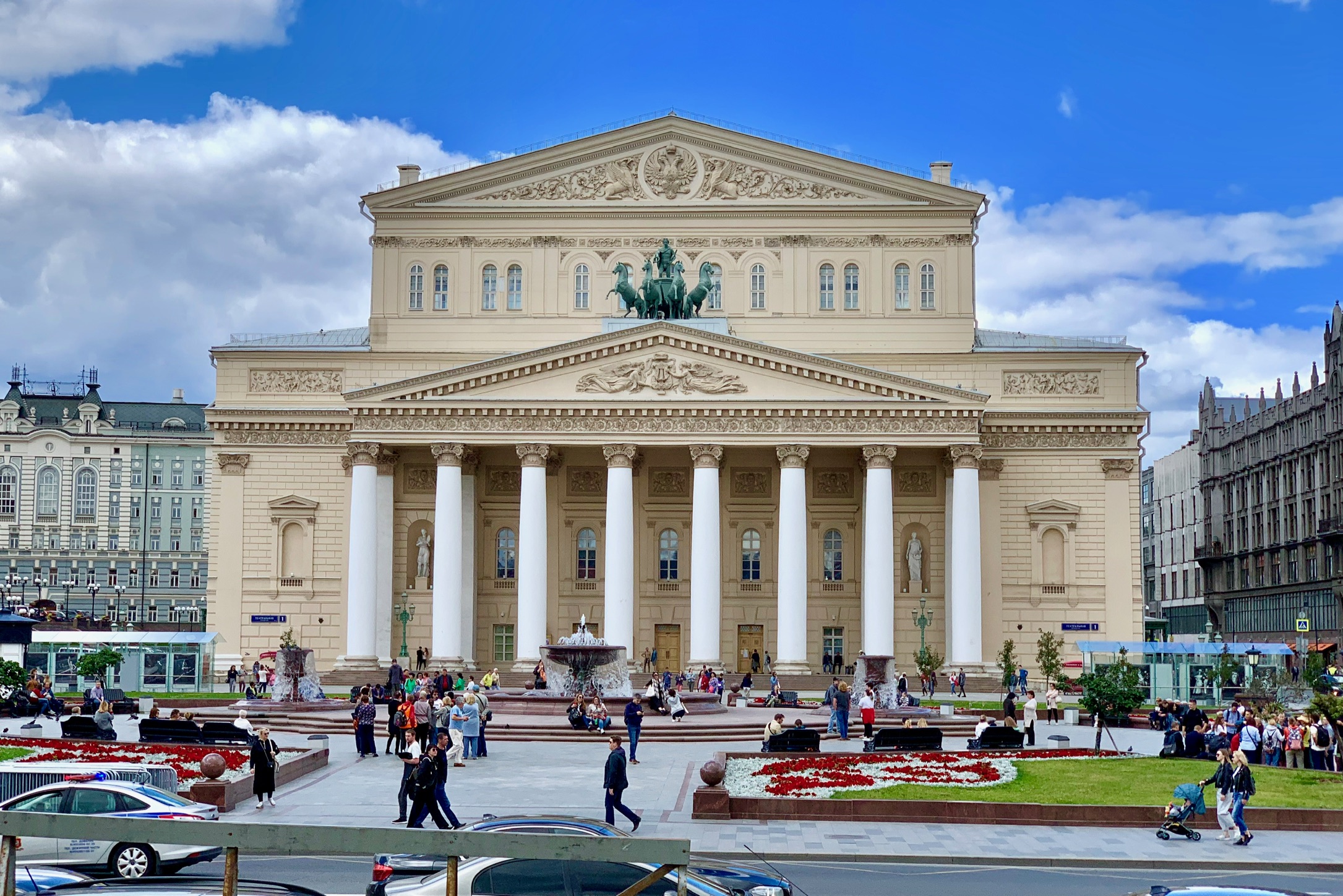 a lot of tourism and commerce. Busy people going about their business, looking at their phones and visiting in cafes. They have a lot of cultural entertainment, of course the Bolshoi Ballet, but also theater and concerts. In rural Russian, like rural America, it was more old fashioned and more of a struggle for jobs. The people we met were cheerful and had a great sense of humor about their history and government
 Travel the World Backpacking